How to use low-dose lithium orotate for bipolar disorder and recurrent depression
In this post I show you 5 tips to make low-dose lithium orotate work more effectively so that you can use a low-dose without the side-effects and still obtain therapeutic benefits
Does low-dose lithium orotate work?

For some people lithium carbonate becomes toxic straightaway and they have to discontinue, some people can tolerate it for many years but unfortunately eventually they suffer from progressive thyroid and kidney damage and for perhaps 25% of people with bipolar lithium is not an effective medicine at all.
The question is, is low-dose lithium orotate strong enough to work as a mood stabiliser for bipolar type I and is an effective medicine for bipolar type II and an effective treatment for chronic depression?
Well I believe that it is, I have bipolar disorder (type II with rapid cycling and mixed states) myself and I used 10 mg of lithium from lithium orotate a day as part of my wellness regime.
Why use Lithium orotate in place of lithium carbonate
Lithium has so many beneficial effects for the bipolar brain, the depressed brain and also for healthy brain’s to prevent ageing related diseases and it would be nice to obtain these benefits but without the side-effects and low-dose lithium orotate combined with other remedies may enable us to get the brain benefits of lithium without the side-effects.It appears that lithium orotate is absorbed into the brain more efficiently than lithium carbonate and so lower doses may still be effective and many people feel that they are but without the side-effects[i] .
It used to be a mystery as to how lithium works but we now know it exerts multiple therapeutic effects and what I propose is by understanding these effects and taking additional remedies that enhance these effects we can enhance the effectiveness of the low-dose lithium orotate and get the benefits without the side-effects.
DISCLAIMER
Although I am a great proponent of people using natural self-help therapies to improve and take control of their health do not under any circumstances discontinue any medication that you need to keep you safe. Natural remedies including low-dose lithium orotate are not as strong as pharmaceuticals and you cannot simply replace mood stabilisers including lifting carbonate with lithium orotate. I keep my own bipolar disorder completely under control using natural remedies but it took me years of study and trial and error to work out how to do this and because the natural remedies are not so strong I have to take a lot of them swallowing 25 pills with breakfast and the same with dinner.
Lithium is not a drug it’s an essential nutrient
When you think of lithium what comes to your mind, do you think of a powerful drug associated with serious mental illness, well that’s one aspect of lithium but it’s a mistake to think that the only role lithium has in health and medicine.When animals have been fed a diet containing no lithium they suffered serious health consequences to their spleen, immune system, reproductive system and brain health; establishing that lithium is an essential nutrient required in our diet. The exact daily requirement has not yet been determined, preliminary suggestions are that the RDA for lithium should be about 1 perhaps 2 mg for the average healthy person. If you are interested in my work however then sorry to say you are probably not an average healthy person and your brain may do better with above average levels of lithium.
In nutritional medicine were not only concerned with preventing deficiencies, what we do is to use natural nutrients at elevated but still safe doses to push accentuate the effects that that nutrient house in the body. In the case of lithium primary effects are on the health brain and this leads to the question:
Why do you want to take lithium in the first place?
What are the specific health benefits, properties or effects that lithium has met you want or need help with in your brain?
The health benefits of lithium:
Lithium enhances the metabolism of every neurotransmitter studied; lithium boosts serotonin, dopamine, norepinephrine, GABA and acetylcholine activity in the brain.
Lithium boosts diminished signal activity (2nd messenger signals) in depressed and bipolar depressed brains.
Lithium controls mania by dampening down excess glutamate in the manic brain.
Lithium controls mania by dampening down excess dopamine in the manic brain.
Lithium decreases inflammation in the brain
Lithium counteracts Canadian buildup in the manic brain.
Lithium boosts neuroplasticity to recover lost synapses in volume in the depressed and bipolar brain.
How to make low-dose lithium orotate more effective
Tip #1 to make low-dose lithium orotate effective
Combine inositol with lithium to increase activity in the depressed brain
Scans show in the depressed brain there is significantly reduced activity on many levels, including blood flow, metabolic energy production and more.
In contrast to neurotransmitters that carry signals from one neuron to another across the synaptic gaps that exist in synapses between neurons, signals are carried within neurons by what is called the second messenger system.
In the depressed brain there is under activity of the second messenger system and lithium counteracts underactive second messenger signal strength in the depressed brain boosting activity.
One of the main molecules used by the second messenger system is inositol and inositol has been shown to have antidepressant effects at least in some studies[ii]. Studies into the antidepressant effects of inositol have been limited but this is common with natural remedies and the results have been inconsistent. Inconsistent results should not be interpreted as meaning that a substance does not have therapeutic effects for some individuals, it could be that some people reduced inositol second messenger activity is not involved in depression and therefore supplementing inositol would have no effects, however for others it could be very therapeutic.
CAUTION
In bipolar mania there is increased inositol second messenger activity and it is believed that one of the ways that lithium counteracts mania is by dampening down inositol activity in the neurons. So during manic phases you would never take inositol and you should be cautious using inositol as an antidepressant supplement if you have bipolar depression because it could flip you up into mania.
In my clinic I routinely simultaneously combine remedies that are antidepressant and antimanic or mood stabilising at the same time; this so-called combination therapy can be an effective way to manage bipolar depression. With regard to lithium and inositol however they appear to have such contradictory and opposing effects that I do not recommend supplementing inositol with bipolar disorder except perhaps as an emergency during periods of suicidal depression.
People with depression may be concerned that lithium could further suppress their second messenger system because in the bipolar brain it reduces inositol but the fact that lithium can have an antidepressant effect for chronic unipolar depression suggests that it works differently in the unipolar as opposed to bipolar depressed brain.
Inositol may also have therapeutic benefits for improving insulin sensitivity and treating polycystic ovarian syndrome so if you have PCOS/insulin sensitivity/type II diabetes and depression you should definitely try inositol. This doesn’t mean to say that inositol is only potentially useful for women.
The bottom line is that inositol is regarded as a very safe substance up to 20 g and so you can conduct a personal experiment to see that has therapeutic effects for you.
Tip #2 to make low-dose lithium orotate effective
Lithium dampens down excess glutamate in bipolar mania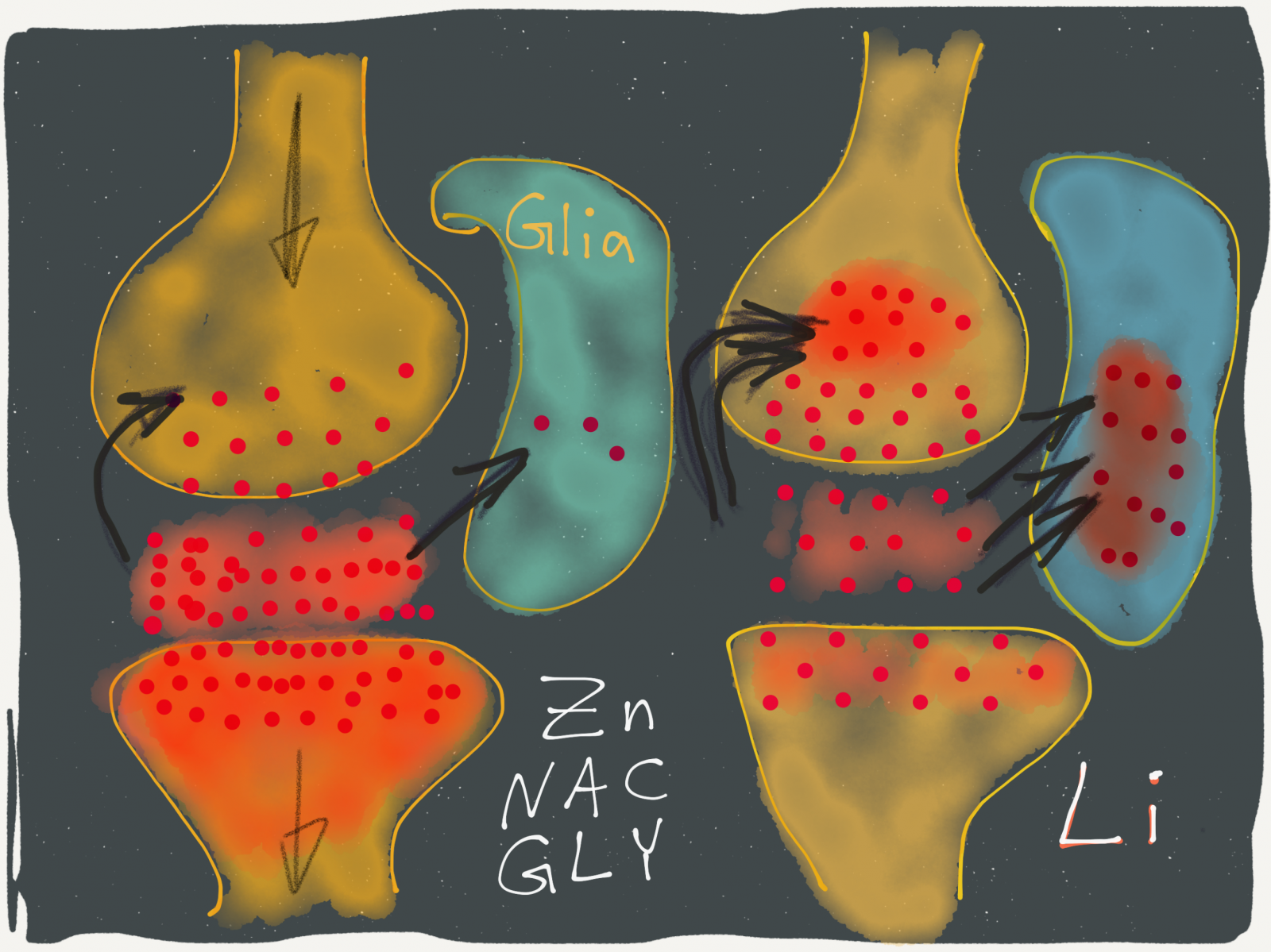
One of the therapeutic effects of lithium is that it increases the rate of clearance of glutamate from the synapses. During periods of bipolar mania the excitatory neurotransmitter glutamate builds up inside the synapses causing excessive firing or activity within the brain. This produces the classic speeded up thinking, increased energy and activity characteristics of mania/hypomania.
If this is the effect you are looking for there are additional remedies you can use to increase the clearance rate of glutamate from your synapses including:
Zinc at high doses of doses of 40-60 mg. When I first began to take control of my hypomania’s I would sometimes take doses as high as 90 mg for one or two days to heavily sedate glutamate activity in my brain. It would knock me out and make me sleep (and sleeping in a totally dark room is one of the best treatments for mania) but 90 mg a day will become toxic if taken long-term; even doses as high as 60 mg can compete with iron and copper resulting in these minerals becoming deficient and so you have to protect these. Iron is actually needed to manufacture dopamine and so if you became iron deficient they could actually create depression.
NAC cysteine
At moderate doses evenly distributed such as 600 mg twice a day NAC cysteine can help to counteract glutamate buildup in the synapses. Higher doses however of say 1200 mg taken in a single dose can have a dopaminergic antidepressant effect which can be great at times of depression but must be avoided when the goal is to control mania/hypomania.
Unlike any other amino acid remedy NAC cysteine appears to lose its effectiveness if taken for six months or so continuously, a simple strategy to avoid this habituation is to omit taking it one day per week.
Magnesium is another remedy that assists clearance of glutamate from the synapses that you can supplement along with lithium to enhance its effectiveness. 800 mg divided between two meals would be the standard dose however if you have kidney insufficiency perhaps from taking lithium carbonate ironically then I would recommend a lower dose of 400 mg for safe long-term use. Magnesium comes in several forms, which one you choose will depend upon other factors and health goals.
Riboflavin, I read in a scientific paper that riboflavin has anti-glutamate effects however I haven’t had the opportunity to make any clinical observations how effective or not riboflavin may be.
Vigourous exercise counteracts elevated glutamate activity, additional strategies I use myself are supplementing glycine and taurine.
Tip #3 to make low-dose lithium orotate effective
Lithium reduces inflammation in the brain, to enhance its effectiveness eliminate every source of unnecessary inflammation in your body and brain.
There are numerous sources of inflammation which I talk about in other posts however common and significant ones include:Stress Induced Inflammation
Overactive stress responses in the body increases inflammation in the brain. What matters is how active the stress physiology in your body is, rather than how much stress you have in your life. Brain scans have shown that in people with depression and bipolar disorder there is enlargement and overactivity in what is called the HPA axis. In response to stress or the perception of threat the hypothalamus signals to the pituitary to signal to the adrenal glands to discharge the hormone cortisol and when cortisol levels are chronically high it ramps up inflammation in the brain.An overactive HPA axis may be genetically preprogrammed or acquired as an adaptation to prolonged stress exposure particularly in the early years. The most efficient and direct I use for this issue is growing and developing the off switch to the HPA axis by performing a course of deep relaxation brain training. I have a free MP3 recording to guide you through this technique, to obtain a copy of this simply email me at hello@petersmithuk.com asking for the deep relaxation brain training MP3.
Additional strategies to reduce stress induced inflammation include psychotherapy to remodel traumatic memories and experiences that repeatedly trigger the HPA axis, meditation has also been shown to reduce chronic stress (I teach meditation classes specifically designed for mental health problems online, see my site for details, another technique is vagus nerve stimulation.
Dietary Induced Inflammation
A diet containing excessive amounts of omega 6 oil ramps up inflammation in the body.Lithium counteracts imbalanced fat metabolism in the bipolar brain
Another discovery is that people with bipolar mismanage specific fats, bipolar brain is release an excessive amount of an omega-6 fat called arachidonic acid that promotes inflammation, furthermore bipolar brains have poor metabolism of omega-3 oils EPA and DHA. When omega-3 oils are underrepresented and arachidonic acid is overrepresented the result is increased inflammation.
And a deficiency (real or relative to arachidonic acid) of the omega-3 fat called DHA which is anti-inflammatory[iii].
Our body makes some arachidonic acid from the omega-6 oil (linoleic acid) found in nuts and most seed oils but we can also consume a lot of arachidonic acid directly in animal foods especially red meats and pork. Our body makes some DHA from the oil found in a few vegetarian sources including linseeds, hemp and Chia seeds but unfortunately we only convert about 1% these vegetarian omega-3s into DHA and this is not enough to obtain the therapeutic levels needed by the bipolar brain.
A diet containing a lot of arachidonic acid (duck, chicken, eggs) and only a little DHA (fish and fish oils) are giving the lithium they take a huge obstacle to overcome and may not obtain satisfactory results from low-dose lithium;
The solution is to reduce your omega six intake by avoiding omega six vegetable oils such corn, rapeseed, sunflower seed oils et cetera, a plant-based or reduced meet diet also significantly reduces omega six intake and additionally has other anti-inflammatory effects.
Over several years of experimentation I became convinced that I could make my low-dose lithium supplements work better by altering the ratio of omega 6 to omega-3 in my diet. I would cut down on foods high in omega 6 including nuts and seeds, stopped eating red meat and cut down on white meat and eggs and increased my consumption of omega-3 fish oils; basically I ate a more plant-protein based diet low on omega 6 containing nuts and rich in fish oils. When I was on this diet I felt that even a microbe dose of 0.5-1 mg would have a healthy effect on my bipolar brain, it wasn't quite mood stabilising nor did I notice it improving my neuroplasticity however it was certainly capable of correcting my disturbed bipolar sleep cycles.
To me it felt like the omega-3 oils were helping the lithium to work and I cut down on omega-6 oils because they compete with omega-3’s, I was close but it's the other way around it's the lithium that is correcting an oil imbalance in the bipolar brain and what I was doing was correcting the oil imbalance as much as I could buy the oils I ate so that even a very low dose of lithium was now capable of doing the rest so to speak. I believe that high doses of lithium carbonate used in psychiatric medicine could probably be reduced significantly for anyone prepared to eat a healthy diet low in arachidonic acid and high in omega-3.
Spikes in insulin ramp up inflammation
We get surges in insulin when we consume carbohydrates with a high GI that quickly convert into sugar.We also get a search in insulin when we consume animal proteins without consuming any carbohydrates at the same time. This may seem counterintuitive but consumption of the small matter low GI carbohydrate at the same time as animal protein produces less insulin than if we eat protein without carbohydrates; this is the reason I do not recommend the ketogenic diet.
Brightly coloured plant foods rich in polyphenols and specifically flavonoids have anti-inflammatory and antidepressant effects so to reduce inflammation and improve the health of the brain consume vast quantities polyphenols and flavonoids rich foods together with supplementing lithium orotate.
If you have SIBO however (Small intestines bacterial overgrowth) do not consume huge amounts of plant foods until you have fixed this problem. I have been developing treatments for SIBO and IBS since late 1980s, if you’d like more information or to book an appointment contact me by email:
hello@petersmithuk.com
Anti-Inflammation Supplements
There are numerous anti-inflammation supplements, such things as curcumin from turmeric and skullcap. There are too many to discuss in this article and actually too many to swallow them all. When I design a prescription for a client I put together a stack of remedies that are not only anti-inflammatory that have some other common therapeutic effects, for example I may combine remedies that are anti-inflammatory with dopaminergic effects or anti-inflammatory with serotonergic effects et cetera.Tip #4 to make a low-dose lithium orotate effective
Take 3 g of vitamins C to counteract the buildup of vanadium
Vanadium is a trace element that we naturally ingesting our diet, vanadium levels buildup in the blood and brains of people with bipolar disorder and this produces toxic oxidative stress. One of the effect of lithium is to counteract toxic vanadium effects, however vitamins C has been shown to effectively flush out and reduce vanadium levels and improve bipolar symptoms, specifically shortening the length of manic episodes[iv][v].CAUTION
Large doses of vitamins C can affect insulin levels, diabetic treatments and blood glucose tests.
Tip #5 to make a low-dose lithium orotate more effective
Boost Neuroplasticity
Scans have shown that in depressed and bipolar brains there is a loss of synaptic connections and volume in critical structures that control mood and emotional processing including the hippocampus, cortex and insular. Lithium boosts neuroplasticity to recover lost synaptic connections and volume, there are numerous other things we can do to enhance neuroplasticity including:
- Again a high flavonoids diet.
- Not just what we eat but how we eat, specifically the timing of how we eat can affect neuroplasticity significantly. Practice intermittent fasting daily for at least 12 hours overnight i.e. if you have breakfast at 8 AM you must finish dinner at 8 PM.
- It’s also critically important to not eat for at least 2 ½ hours before going to sleep because once you start producing melatonin you (the sleep hormone) it blocks insulin effectively making us insulin resistant overnight; so you have to leave a couple of hours after eating for insulin to clear out and reduce glucose levels from your evening meal before the melatonin/insulin resistance effect kicks in.
- Aerobic physical exercise boosts neuroplasticity/BDNF but even very short bursts high intensity interval training (HIIT exercise) has significantly stronger neuroplasticity boosting effects.
- There are numerous natural remedies that boost neuroplasticity/inflammation. I’ve been developing treatment programs to boost neuroplasticity/BDNF since 2012.
- Meditation brain training boosts neuroplasticity and rose brain volume. We now know the more intense and activity in the brain them or neuroplastic change is stimulated, so I teach a style of meditation that involves achieving a highly focused concentrated state, the goal is to give specific parts of the brain and intensive workout in the same way that we give specific muscles a workout when we do strength training in the gym. I think of meditation brain gym.
Summary
Lithium orotate is better absorbed into the brain and can therefore be taken at lower doses compared to lithium carbonate and at these lower doses it does not produce any or at least any serious side effects. We can enhance the effectiveness of the low dose by considering the properties or effects that lithium has in the brain and then combining additional remedies, diets and other measures to enhance those effects and therefore extract the maximum therapeutic benefits from the low dose of lithium.
[i] J Pharm Pharmacol. 1978 Jun;30(6):368-70. Rat brain and serum lithium concentrations after acute injections of lithium carbonate and orotate. Kling MA, Manowitz P, Pollack IW. PMID:26768
[ii] Double-blind, controlled trial of inositol treatment of depression.
Levine PMID: 7726322 DOI: 10.1176/ajp.152.5.792
Levine PMID: 7726322 DOI: 10.1176/ajp.152.5.792
[iii] doi: 10.1194/jlr.M002469
[iv] Vanadium and manic depressive psychosis.
Naylor PMID: 6443582
Naylor PMID: 6443582
[v] Naylor GJ, Smith AH. Vanadium: a possible aetiological factor in manic depressive illness. Psychol Med. 1981;11:249–256. [PubMed] [Google Scholar]
Cell Transplantation, Vol. 18, pp. 951–975, 2009 0963-6897/09 DOI: 10.3727/096368909X471251 Copyright 2009 Cognizant Comm. Review of Lithium Effects on Brain and Blood Wise Young
Cell Transplantation, Vol. 18, pp. 951–975, 2009 0963-6897/09 DOI: 10.3727/096368909X471251 Copyright 2009 Cognizant Comm. Review of Lithium Effects on Brain and Blood Wise Young